

A Master of Technology (MTech) is a specialized postgraduate program designed for students who want advanced technical expertise, strong analytical skills, and deeper industry knowledge. This Complete M.Tech Overview provides clarity on the course structure, eligibility requirements, and long-term career prospects. Students exploring MTech after B.Tech or those evaluating academic progression will find this guide helpful. The aim is to simplify the pathway to postgraduate engineering while helping you make informed decisions about specializations, colleges, and career outcomes.
What is an MTech Programme ?
| Category | Details |
| Eligibility | 10+2 + B.Tech/B.E in a relevant engineering field |
| Duration | 2 Years (4 Semesters) |
| Typical Core Subjects | Advanced Engineering Mathematics, Research Methodology, Computer-Aided Design, Advanced Algorithms, Digital Systems. |
| Elective Subjects | Machine Learning, Power Electronics, VLSI Design, Cloud Computing, Renewable Energy Systems, Robotics, Environmental Engineering. |
| Laboratory Work | Advanced Labs such as VLSI Lab, Programming Lab, Simulation Lab, Power Systems Lab, Mechanical CAD Lab, M.Tech after B.Tech |
The MTech degree is a two-year postgraduate engineering course focused on advanced conceptual learning, research application, and problem-solving techniques for real-world industry challenges. It combines classroom learning with laboratory work, internships, and, in most cases, a mandatory project or dissertation. This structure ensures that graduates gain both technical depth and practical exposure across their chosen engineering domain.

Course Structure of M.Tech
The MTech syllabus varies depending on the specialization, but the overall structure remains consistent across most universities. It blends theoretical modules with research-oriented components and hands-on training to ensure students develop advanced engineering competencies.
1. Core Subjects & Advanced Concepts
In the initial semesters, students engage with core subjects that strengthen their understanding of advanced engineering principles. These subjects differ by specialization—for example, VLSI Design, Power Systems, Structural Engineering, Data Science, Artificial Intelligence, or Thermal Engineering.
2. Elective Subjects
M.Tech programmes typically offer a wide range of elective subjects. These electives enable students to customize their academic path based on career goals, research interests, or emerging industry demands.
3. Laboratory & Practical Training
Most specialisations include advanced lab work to help students master technical tools, M.Tech Syllabus, simulation platforms, and industry-standard equipment. This ensures strong operational skills and practical understanding.
4. Project Work / Dissertation
The final year focuses on project research or a dissertation. Students work under faculty guidance to deliver a research-based or industry-driven project. This component improves innovation capacity and enhances employability in both research and corporate roles.

Eligibility for MTech Admission
To enroll in an M.Tech programme, students must meet specific eligibility criteria defined by universities and technical institutions.
1. Educational Qualification
A Bachelor of Technology (B.Tech) or Bachelor of Engineering (B.E.) degree from a recognized institution is mandatory. Candidates considering M.Tech after B.Tech use keyword once in will find this the most straightforward pathway.
2. Minimum Percentage Requirement
Most universities require a minimum aggregate score, typically between 55% and 60%, in the undergraduate degree.
3. Entrance Exams
- GATE (Graduate Aptitude Test in Engineering)
- University-level or state-level entrance tests
4. Work Experience
Some specialisations, especially in emerging technologies or part-time programmes, may prefer or require relevant work experience.
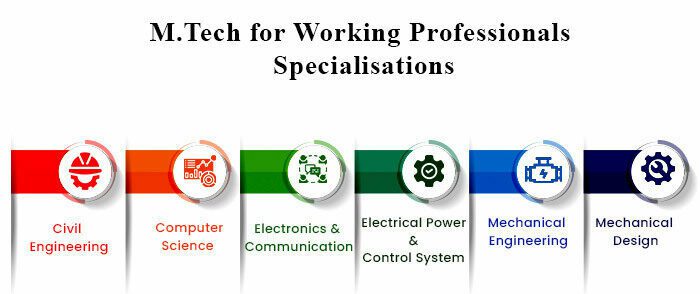
Top Specialisations Offered in MTech
M.Tech offers a diverse range of specialisations to meet growing industry needs. Popular options include:
- Computer Science & Engineering
- Data Science & Machine Learning
- VLSI Design & Embedded Systems
- Mechanical Engineering
- Structural Engineering
Complete M.Tech Overview
Completing an M.Tech opens a wide range of career opportunities across technical, managerial, and research domains.
1. Engineering & Technical Roles
Graduates can work as design engineers, project engineers, system architects, data scientists, research engineers, or domain specialists across sectors such as IT, manufacturing, telecommunications, energy, construction, and electronics.
2. Research & Development (R&D)
Many industries, especially in technology, automotive, and electronics, require skilled researchers to develop new products and systems. M.Tech graduates with strong research aptitude find rewarding roles in R&D labs.
3. Academic & Teaching Roles
Those inclined toward education can pursue careers as lecturers, assistant professors, or academic researchers in engineering colleges and universities.
4. Government & Public Sector Opportunities
Government organizations such as ISRO, DRDO, BHEL, ONGC, and state-level engineering departments recruit M.Tech graduates for various technical and managerial roles.
5. Doctoral Studies
Students looking to pursue advanced research or academic excellence can enroll in Ph.D. programs after their M.Tech. This pathway is ideal for those aiming for high-level research or university teaching careers
FAQ:
1. What is the eligibility required to pursue an M.Tech program?
To apply for an M.Tech, candidates must have completed 10+2 and a B.Tech/B.E degree in a relevant engineering field with the minimum percentage required by the institution.
2. How long does it take to complete an M.Tech course?
The M.Tech program typically has a duration of 2 years, divided into 4 semesters that include coursework.
3. What does the M.Tech syllabus generally include?
The M.Tech syllabus consists of core subjects, elective subjects, advanced laboratory sessions, research methodology, and a major project or thesis in the final semester.
4. Is M.Tech a good option after completing B.Tech?
Yes, M.Tech after B.Tech is a strong choice for students who want in-depth technical knowledge, advanced career opportunities, research exposure, or academic roles.
5. What career options are available after M.Tech?
After completing M.Tech, graduates can pursue careers in engineering roles, research & development, academia, public sector organizations, IT companies, or continue their studies through Ph.D. programs for higher research positions.
This Complete M.Tech Overview gives you a clear picture of the course structure, eligibility standards, and career prospects. Whether you are exploring M.Tech after B.Tech or reviewing the m tech syllabus across specialisations, this guide supports informed decision-making. Choosing the right programme—along with the best colleges for M.Tech—can significantly impact your professional journey and long-term career success.