A cost accounting course is a practical way to understand how businesses manage expenses, boost profitability, and make informed financial decisions. Whether you’re an aspiring accountant, business owner, or working professional, this guide outlines what to expect from a beginner-friendly program. You’ll learn key cost accounting basics and explore essential cost accounting methods that strengthen financial analysis. For flexible learning, a cost accounting online course also offers a convenient way to master these concepts at your own pace.
What Is a Cost Accounting Course?
A cost accounting course introduces the principles, processes, and practices used to calculate, track, and control business costs. Unlike general financial accounting, which focuses on external reporting, cost accounting gives organizations internal insights to improve planning, pricing, and budgeting.
This type of course typically covers:
- Cost behavior and classification
- Budgeting and forecasting
- Standard costing and variance analysis
- Pricing strategies
- Performance measurement
Key Topics Covered in a Cost Accounting Course
Below is a simplified table highlighting core areas typically included in foundational cost accounting training:
| Topic Category | Description | What You’ll Learn |
| Cost Accounting Basics | Introduction to cost types and cost flow | Direct vs indirect costs, fixed vs variable, cost allocation |
| Cost Accounting Methods | Various approaches to measuring and assigning costs | Job costing, process costing, activity-based costing |
| Budgeting & Forecasting | Planning financial performance | Building budgets, estimating future costs, variance handling |
| Cost Control Tools | Techniques to reduce expenses and improve efficiency | Break-even analysis, standard costing, cost reduction strategies |
| Reporting & Decision-Making | Presenting cost data for internal decisions | Profitability analysis, pricing decisions, performance reports |
Each topic forms a core part of understanding how cost management works in real business environments.
Understanding Cost Accounting Basics
Beginners often start with basics because they set the foundation for every concept that follows. A strong grasp of cost categories, cost flow, and cost behavior helps learners analyze real financial scenarios accurately.
Key foundational areas include:
- Cost classification: Identifying fixed, variable, and mixed costs
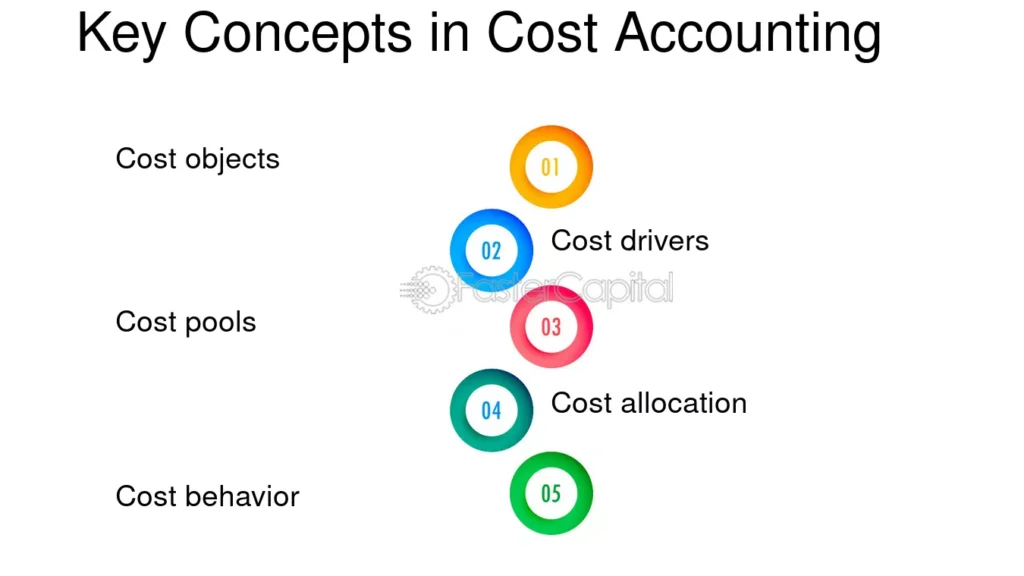
- Cost allocation: Assigning costs to departments, products, or activities
- Cost behavior: Understanding how costs change with business activity
Mastering these essentials allows you to progress confidently into more advanced areas such as cost control and strategic planning.
Overview of Cost Accounting Methods
One of the most important sections in any cost accounting course is understanding different ways to measure and track costs. Various industries use different cost accounting methods, and choosing the right one improves financial clarity.
1. Job Costing
Used when products or services are customized.
2. Process Costing
Suited for mass production with uniform outputs..
3. Activity-Based Costing
Assigns costs based on activities that drive resource use.
4. Standard Costing
Uses predetermined costs to measure performance and manage variances.
Each method helps businesses understand where money is being spent and how to make cost-effective decisions.
Who Should Enroll in a Cost Accounting Online Course?
- Students preparing for accounting or finance careers
- Professionals in managerial roles
- Entrepreneurs managing their own finances
- Anyone seeking to strengthen analytical and budgeting skills
Online programs offer flexible learning, downloadable resources, and practical exercises to reinforce comprehension.

Benefits of Taking a Cost Accounting Course
| Benefit | Why It Matters |
| Better Financial Control | Helps businesses manage expenses & boost profits |
| Improved Decision-Making | Supports strategic planning and pricing |
| Higher Career Value | Enhances roles in accounting, finance, and management |
| Practical Skill Development | Teaches real-world budgeting and cost-tracking |
| Business Efficiency | Helps identify waste and streamline operations |
How Cost Accounting Supports Business Decision-Making
The true purpose of cost accounting is not just tracking costs—it’s enabling better decisions. After completing a learners are able to interpret financial data and translate it into meaningful insights.
Businesses use cost accounting to:
- Set profitable pricing
- Evaluate department performance
- Measure product profitability
- Build budgets aligned with business goals
- Identify inefficiencies
- Plan cost reduction strategies
These skills are essential for any organization focused on growth and sustainability.
FAQ’s:
1. What is a cost accounting course?
A cost accounting course teaches how to track, analyze, and control business costs to support better financial decisions.
2. Who should take a cost accounting course?
It’s ideal for students, entrepreneurs, managers, and professionals who want stronger financial and budgeting skills.
3. What topics are covered in a beginner cost accounting course?
Courses typically include cost accounting basics, cost classification, cost accounting methods, budgeting, and cost control tools.
4. Is a cost accounting online course effective?
Yes, online courses offer flexibility, structured modules, and practical exercises that help learners build real-world skills.
5. Do I need prior accounting knowledge to start?
No, most beginner courses start with fundamentals, making them suitable even for learners with no accounting background.
A cost accounting course is an excellent first step toward understanding how organizations control costs, improve financial performance, and strategically manage resources. Whether you choose classroom learning or a flexible cost accounting online course